Thursday, December 17, 2015

Charity Fair Blog 12/17

https://tse3.mm.bing.net/th?id=OIP.M1b0a883250218c775511190b0c60207aH0&pid=15.1


Summary: This week in class I learned about the carbon footprint for our materials we need to make our stuff that we using for the charity fair. I learned that it depends where your item is made to  decide what type transport it has.There are three main factors in the way you have deiced is distance (km) quantity and g of CO2. We also did things in other classes an example would be in social studies we researched about our charity. There was a lot of things we also did in other classes but  the is the end of the summary.


Backwards looking to make this it took me through a long process to make. We did a lot of work in different classes and it was very hard to manage all the work I had to do. But in the end I got all the work done and hopefully my charity will get the money.


Inward looking I did not like the fact that it was in 5 of my 6 classes because I had to manage all that work. Another thing that bothered me was the fact that my group was doing different things because we were making different things. The last thing that bothered me was the timing of when we decided to make my muffins.

Outward looking I think i would give this project a B because we still have a lot of thing we need to work on still. The first thing we need to work on is our presenting skills when we presented to people it was kind of awkward. We also need to work on our team work when we presented one person did all the talking and it was different person each time.

Forward looking I would like to improve on my working time because I dragged it out to the last day. There was a lot a lot of work I had to do so I decided to spread things out so I did not get stressed . But in the end I finished Wednesday morning so barley finished. 

Sunday, December 13, 2015

Water Cycle 12/13

http://7bgeography.weebly.com/uploads/2/4/1/0/24105296/8541878_orig.jpg

Summary: This week in class we learned about the water cycle. The water cycle is process that makes sure that everyone and thing has enough water to go around. The most common way the people see the water cycle is: evaporation, condensation, precipitation, run off then it happens all over again. There are a lot of parts in the water cycle there is even an animal drinking water which is a part of the water cycle. Fun Fact did you know that the amount of water on earth will never change on its own.

SP4 Analyzing and Interpreting  data:
The way I analyzed data this week was we went on a website and did a water cycle adventure. It was completely random of where you go next so I thought that means the water cycle is kind of random. The way I interpreted the data was I drew a cartoon of the water cycle with at least ten panels.

Sources: http://www.discoverwater.org/blue-traveler/

Sunday, December 6, 2015

Atmosphere 12/6


Summary: This week in class we learned about the atmosphere. The atmosphere is made up of of layers: Troposphere,  Stratosphere, Mesosphere and the Thermosphere. The Thermosphere is made up of two layers Ionosphere and Exosphere. We also learned about the water cycle which is a loop that makes sure that everyone and thing gets enough water. Fun Fact did you know only 1% of water is usable to humans and land animals.


SP: SP 4 Analyzing and Interpreting Data
This week in class how I Interpreted data was that we had chart that I had to fill out. We had to use dots and draw lines between  them we did this was that we saw the height of where we had to put the dot and where it goes in the box was determined by the temperature. At the end we looked at the chart and saw the temperature for most of the altitude!

Monday, November 16, 2015

Letter to Cuttatree 11/16

Dear Mr. Cuttatree


I am the Spider Monkey.I am writing to you today to tell you a little bit about myself and my role in the rain forest ecosystem so that you may reconsider building the Uppity Resort.

My official name is Ateles Geoffroy. My body length is 38 - 48 cm my tail length is 63 - 82 cm i weigh 9 - 10 kilograms if i am a male. If i am a female my body length is 42 - 57 cm my tail length is 75 - 92 cm my weight is 6 - 8 kilograms. Some of my other diffing features are : i am usually all black but sometimes i have flesh colored rings around my eyes. I also don't have much under fur but i do have a slender body type. The last diffing feature i am going to tell you about is that i have long narrow hands.

What i do help other organisms is i eat all the bugs on my friends backs this helps other organisms by keeping the bug population stable. That is important because the bugs eat all the trees this is mutalistic relationship because the trees get protection and I get a home and food so we both get something out of it which is mutalistic.

I  am not the supreme god of the rain forest things eat me. I don't know why I bit into one of my friends once and he tasted horrible. I get eaten by a lot of things but I also eat a lot of things. So now that we are out of the fact that I eat and get eaten I will tell you what eats me and who I eat. I get eaten by jaguars ocelots pumas and eagles. I eat bird eggs, flowers, insect larva, spiders and more.

So Mr. Cuttatree do not build the uppity resort it will hurt me and my best friend bobby.  I hope I changed your mind about building the resort.

Sincerely,
Spider Monkey


Resources :

Sunday, November 15, 2015

Interdependice of Organisims 11/15

http://u.osu.edu/sabreelab/files/2013/03/symb_web2.png


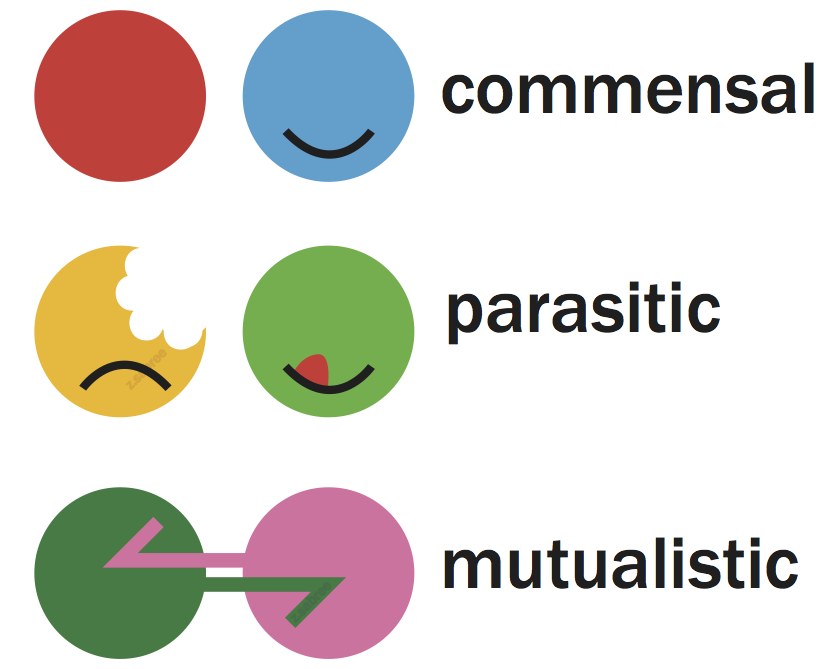
Summary:  This week in class I learned about symbiosis.  There are three types of symbiosis.  The first is parasitic, which is when one organism gets a good thing out of it and the other organism is hurt.  An example of parasitic symbiosis is the dog and the tick. The second type of symbiosis is commensal, which is when one organism gets something good out of it and the other organism is not hurt by it.  An example of a commensal symbiotic relationship is the spider monkey and a rainforest
tree.  The third and final type of symbiotic relationship is mutualistic, which is when both organisms get a good thing out of it. An example of a mutualistic symbiotic relationship is a bee and the flower.

SP4 : Analyzing and interpreting data
In class the way  I interpreted  data is we got a research paper and we had to write down the defining features of the organism we were assigned also what it eats what eats it also another symbiotic relationship besides parasitic and we also had to write down what would happen to the rainforest ecosystem if the assigned organism went missing from that eco system.

Friday, November 6, 2015

Food Webs 11/6

http://gianpanda.weebly.com/uploads/1/7/3/7/17374649/585361556.jpg
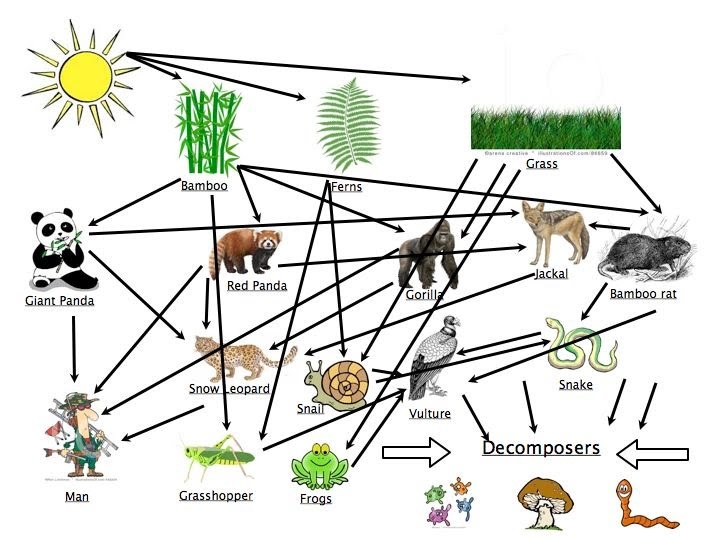
Summary: This week I learned about food webs in class. A food web is a bunch of food chains rolled up in to one. A food chain is a straight line that goes producers, herbivores, first level carnivores, second level carnivores, then at top of the food chain are decomposers. One thing I learned about food webs is if one thing goes out of the food web, everything will change in that food web. The last thing I learned is if one thing dies it's predator will lose numbers in population but probably will not die off.


SP4: Analyzing and interpreting data
We studied a food web in class and we had to answer questions related to that food web. An example would be; what animals would compete more if the toad disappeared from the ecosystem?

Sunday, November 1, 2015

Photosynthesis 11/1

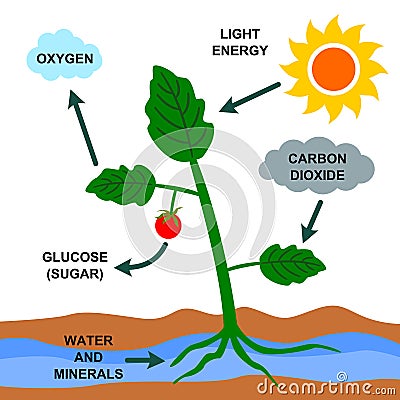
http://thumbs.dreamstime.com/x/cartoon-illustration-photosynthesis-process-29925058.jpg


Summary: This week I learned about Photosynthesis in class. One thing I learned about photosynthesis is that oxygen is actually a waste by-product of photosynthesis. Another thing I learned is that photosynthesis is used to make glucose the food of the plant. One other thing I learned about his week is producers and consumers a producer is a organism that can make its own food using the sun. A consumer is A organism that feeds off of other organisms for energy and food.