Sunday, October 29, 2017

Ionic bonding 10/29

http://chyscience.blogspot.com/2012_08_01_archive.html


Summary: This week in class we learned about ionic bonding. Ionic bonding happens when two atoms (metal and non-metal) share an electrons. The atom with the most valence electrons which are the electrons on the outer most shell of the atom, receives an electron from the atom with lesser amount of valence electrons. Then the atoms attract because the atom that got the electron is now a negative ion and the atom that gave the electron is now a positive ion, and then the atoms  bond together to make an ionic bond.

SP2: Developing and using models
This week in class we used model atoms with clay on them to represent electrons. We then were given a sheet of paper with 5 bonds we had to do. We then had to determine whether the bond was ionic or covalent. If the bond was ionic we would give the atom that had more valence electrons an electron from the other atom. If it was a covalent bond then we put the atoms on top of each other.

Friday, October 20, 2017

Covalent bonding 10/20

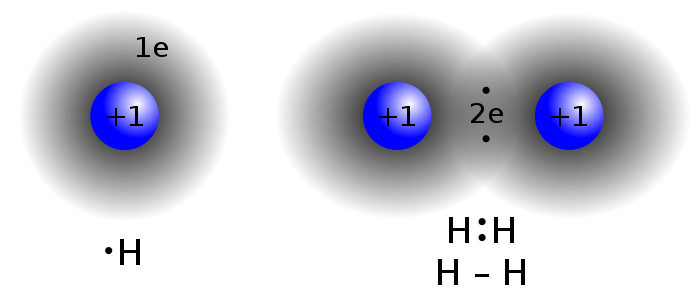
https://commons.wikimedia.org/wiki/File:Covalent_bond_hydrogen.svg


Summary: This week in class we learned about covalent bonding. A covalent bond is formed when two atoms want to take each others electrons. When an the atoms want to take an electron they get closer to the electron. When they get closer to the electron then it begins a loop where the atoms try to get closer to each others electrons bet cannot. YOu cannot have H3O because the amount of inner electrons cannot go over two and the outer electrons do no have strong enough bond to the nucleus for covalent bonds to form.

SP4: Analyzing and interpreting data
This week in class we analyzed data by getting a document with links on it and then reading what each website had to say very carefully. We also analyzed an image that showed us how electrons work in covalent bonding. We interpreted the data in a document that we were given we answered the questions on the document based off of our research

Sunday, October 1, 2017

Periodic Table 10/1

https://www.ptable.com/
Summary: This week in class we learned about the Periodic Table of Elements. The Periodic Table is how we organize the atom elements based on the increasing atomic number aka the number of protons. The other way the table is sorted is atomic families that take on similar atomic properties like reactivity of the atom. Other information the Periodic Table of Elements gives is the atomic mass (protons + neutrons) and the atomic charge (Protons - electrons depending which has more).

SP5: Using mathematics and computational thinking
This week in class we used mathematics to calculate various things for the periodic table. The first thing we used math calculate was the charge of an element by finding what amount of protons or electrons were higher then subtracting them to find the positive (more protons) or negative (more electrons). We then used math to calculate the atomic mass of an atom by adding the protons and the neutrons

Monday, September 25, 2017

Periodic table W.A.C 09/25/17

Have you ever wondered how the periodic table came to be? The periodic table is the place where you can find every element that had been discovered so far. There were three big changes to the periodic table and those three changes is what I will be talking about. These new changes to the periodic table has been due to recent discoveries like noble gases.

The first periodic table was cylinder like. The table had helical graph wrapped around the cylinder. The list was published without any graph and It also used geological terms, it also included compounds on the list. Since it was published with things like this the table itself was completely ignored until the work of mendeleev.

The second periodic table was organized into groups of three called triads. A triad is three elements that are similar so they were grouped together based on that. The table had all of the known elements at the time which was 62. All similar elements were put into a single column even if two elements were going to be in a single box. The table left no room on it for any newly discovered elements.

The discovery of the proton made this the most modern and accurate of the versions of the periodic tables I have talked about. The discovery of the proton led to the discovery of the nuclear charge (atomic number). The atomic number (number of protons) changed the organization of the table to fit that way going from 1 to 10 and so-on. The periodic table was based on the periodic law.

The periodic table has changed a lot due to recent and not-so recent discoveries by amazing people who have change the world a lot. These changes occurred after someone made a discovery which in turn could lead to more discoveries like plutonium and the noble gases. We have to change the periodic table a lot because we have to get the most accurate data possible so we don’t make false discoveries.

Sunday, September 17, 2017

Istopes 09/17

http://imgarcade.com/anion-cation.html


Summary this week in class we learned about:Isotopes, Cations, and Anions. Isotopes are atoms that have lost or gained electrons most of the atoms in the world are isotopes. If an atom loses and electron then it becomes a cation since cations hove lost electrons they have a positive charge. If an atom gains electrons then it is an anion since anions have lost electrons they have a negative charge. Since all isotopes have lost or gained electrons that would make then ions which are atoms that don't have a neutral charge.


SP2: Developing and using models
This week in class we had been working with models on making an isotope and showing how making an electron move into or leave the atom affected the atom. The information that we gathered was that atoms usually become unstable after losing or gaining an electron, we also could tell how many electrons were lost or gained in the atomic abbreviation this information proved to be useful in further work that we did in the class like worksheets.

Friday, September 8, 2017

Atoms 09/08

https://www.livescience.com/37206-atom-definition.html
Summary: This week in class we learned about atoms. Atoms are the things that make up all of the elements and all of the matter that exists or has ever existed. There are three main parts of an atom: The Proton, the Neutron, and the Electron. The proton has a positive charge it also controls the element and atomic number of the atom. The neutron has a neutral charge and balances out the atom also the number of protons plus the number of neutrons is the atomic mass. The electron has a negative charge and for every positive charge in the atom the electron cancels one out.

SP2: Developing and using models

This week in class we went to a website about making atoms. On the website we made a model atom we had ten protons, 13 neutrons, and 10 electrons to work with. We got to see the atomic mass and charge on the atom as well as the element based on the amount of neutrons, electrons, and protons we had added. Sadly, we could only put 3 elements on our worksheet even though I am interested in them all.

Friday, September 1, 2017

Scientific method 09/1

https://www.pinterest.com/lorilynntrimble/chem-scientific-method-variables-graphing/
Summary: This week in class we learned about the scientific method. The scientific method is how scientists ask and test various questions. We use the scientific method to provide a basic outline on how humans gather information. At the end of the scientific method it is important that you share the information you gathered so you may benefit the human race as a whole.


SP5: Using mathematics and computational thinking
This week in class we used computational thinking to predict how long it would take for our whirly bird to reach the ground. After we had done that we had to calculate the average time that it would take for the whirly bird to fall to the ground.