Sunday, March 6, 2016

Rock Cycle 3/6

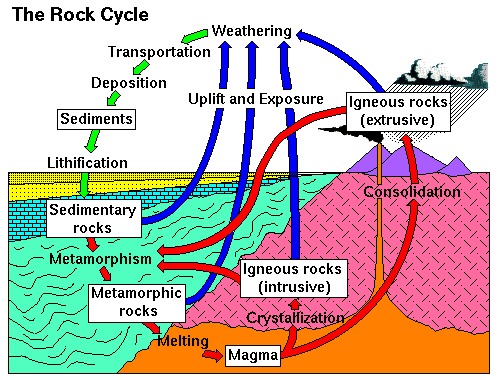
http://www.washington.edu/uwired/outreach/teched/projects/web/rockteam/WebSite/rcycle.gif
Summary: This week in class we learned about the rock cycle. The three main types of rocks are: Sedimentary, Metamorphic, and Igneous. Sedimentary rocks are formed by lot of pieces of you guessed it, sediment or smaller pieces of rock that have been broken down by weathering and erosion, weathering and erosion is when weathering breaks rocks down contentiously and erosion moves those pieces of sediment and sometimes they form igneous rock you know its igneous if it has small pieces of sea shells and other sediment in it. Metamorphic rocks are formed by extreme heat and pressure underground you know its metamorphic when they have ribbon like layers. Igneous is formed by magma and when it cools and hardens you know its metamorphic when it is glass like.

SP 4 Analyzing and Interpreting Data
How we analyzed data was we did a bunch of activities on the computer. How we interpreted data was we put all our research into a bunch of  work sheets.

Sunday, February 28, 2016

Elements 02/28/16

http://www.bpc.edu/mathscience/chemistry/images/periodic_table_of_elements.jpg

Summary:

This week in class I learned about some of potassium’s physical and chemical properties. A physical property is something you can observe without it changing. A chemical property is something that says how it will react with something else and how it changes.  One of the physical properties of potassium is that it melts at 63.38 degrees Celsius.  One of the chemical properties of potassium is its reaction with water.  When potassium reacts with water it explodes and goes all over the place.

SP4 Analyzing and Interpreting Data:
I analyzed data this week by searching on Google, where I found some web sites and also checked the Google smart boxes.  I interpreted the data by reading it and putting the important information onto a Google slide that was called my element baby book.


Sunday, February 14, 2016

Mixtures, molecules, and compounds 2/14

https://i.ytimg.com/vi/VOQzWLeZoEc/maxresdefault.jpg
Summary: This week in class we learned about mixtures molecules and compounds. A mixture is two atoms that are not chemically bonded like a pile of rocks. A compound is two or more different atoms that are chemically bonded like water. A molecule is two or more of the same atoms that are chemically bonded like oxygen. FUN FACT three of the ways to separate mixtures are: chromatography, destoration, and filtration.


SP4 Analyzing and Interpreting  data:
In class how we analyzed data was we used a link or we watched a video, sometimes there was an interactive. We interpreted the data by put them on online worksheets that was made on wizer.me.

Sunday, February 7, 2016

Chemical Changes 2/7/16

http://www.schools.pinellas.k12.fl.us/educators/tec/davis2/matter.ppt/img009.gif


Summary:This week in class we learned about chemical changes. A chemical change happens if something is done to make a new form of matter, some examples are: ( I know this one might sound a little weird but it is true.) farting, evaporation, and when a star collapses on itself and becomes a black hole. There is another type of change in matter and it is called a physical change. physical changes happen when the matter looks different but is the same matter as before some examples are: moving my arm up and down, ripping a piece of paper, and digging a hole in the ground. Fun Fact: There are actually 5 states of for chemical changes to happen to!

SP3: Planning and carrying out investigations

We planned an investigation by setting up these two plates with holes in the and we put things like baking powder and baking soda. we carried out an investigation by mixing them with liquids like vinegar and water. In the end we got results.

Sunday, January 31, 2016

The Three states of matter 1/31

http://img.bhs4.com/76/f/76fa96c4b72eeb48bb1f4fa3ab519ead18b4378c_large.jpg
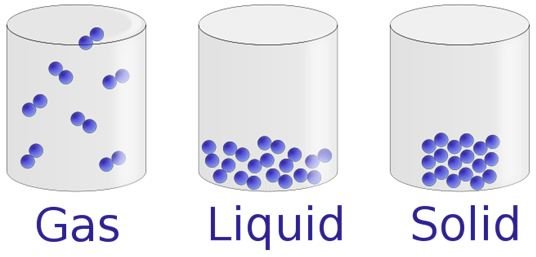
Summary:This week in class we learned about the three states of matter. There are points in which matter changes these types of changes are called chemical changes also the points of which they change some of the names are: Freezing point, Melting point, and Boiling point. There are also changes that don't change the matter but change what the matter looks like which is also called a physical change an example would be if I moved my arm it would look different but the matter hasn't changed. Solids are when atoms cling together and don't move liquid is where the atoms are close but the move a little and gases are where the atoms are all over the place moving around. Fun fact there aren't just three states of matter there are four solids liquids gases and plasma!


S&EP
SP3: Planning and carrying out investigations:
We carried out an investigation by getting out MSG salt sugar Epson salt and tested different things.
The main goal is to find out what the mystery crystal is. So far we have crushed the crystals and we have observed the crystals.

Sunday, January 17, 2016

Experiments 1/17

https://4statesofmatter.wikispaces.com/file/view/science_chemistry.gif/68572951/365x274/science_chemistry.gif


Summary: This week in class we learned about experiments. We learned about how to conduct an experiment and we used sheets to help us out. We also did the last part of the scientific method sharing our results with other scientists. The thing we learned about in the experiments how do different colors of M&M's dissolve faster?

Sunday, January 10, 2016

Weather 01/10/16

https://climate.ncsu.edu/secc_edu/images/sea_breeze.jpg


Summary: This week in class we learned about how hot air and cold air effect weather. There are land breezes and sea breezes, and they happen at different times. When there is a high pressure system, there should be no clouds or weather to be seen. When there is a low pressure system, you can expect low temperatures and cloudy weather with chances of rain. Fun Fact: did you know that there is a symbol for wind speed and cloud coverage.


SP4 Analyzing and Interpreting Data:
This week in class how we analyzed data was we used these things called  a gizmo, we observed the weather in the gizmo. How we interpreted the data was we used packets and filled, them with the information we got from the gizmos.