Thursday, December 20, 2018

Charity Fair 2018


Summary: There are lots of problems in the world, from poverty to a lack of education, the people in these situations can't get them selves out of the situation. A few individuals with kind hearts and a passion for helping other form different groups called charities. These groups specialize in aid people that have severe problems that affect the way that they live everyday. They couldn't do it alone, because a few people to don't have the money to take on an issue like world hunger, but instead they enlist the help of the people to allow them to solve to problems of those in need.

Backward-Looking
Every year we do the charity fair, it's considered to be the biggest event we hold each year. In the past charity fair has been incredibly hard for me. Most of the time I was in a smaller group, which meant that everyone had to do a boatload of work. The hardest part being all of the calculations that we had to do in math, where we and to look through all of our charities fiscal records and see how much they made in one year.

Inward-Looking
When I was working on charity fair I learned that as I grew as a person the work that once seemed hard to me feels much less stressful. Now that I am one year away from high school,  all of the things that used to take me days to complete take much less time to do than before. While in previous years I felt incredibly stressed out by all of the work that we had to do for charity fair, but this year I didn't fell that way.

Outward-Looking
If I were a teacher looking at all of the work that we did for charity fair this year, then I would give the project a B+, because some of the work that had been done was not formatted in the correct way, and we didn't bring our business cards to the event. The rest of the things in the project were phenomenal, and looked incredible.

Forward-Looking
One thing I would like to improve upon is my work ethic, because during the project I didn't do as much for the team as I would have liked to. During the project I slacked off some of the time and looking forward I would like to have been less of a dead weight for the team. I helped out only some of the time rather than all of the time.

Tuesday, December 11, 2018

Speed and Velocity

Distance-time graph example By: Sjlegg

Summary: Speed and velocity are a classic example of scalars and vectors, because speed is only the magnitude of how fast something is going, while velocity is not only the speed but also the direction the object is going. To find the speed of an object, you have to put the distance over the time of an object, and to find the velocity of an object you must put: distance former minus distance latter over time former minus time latter.

SP4: Analyzing and interpreting data
In order to find the speed of various cars, we put them on a ramp and let go, we recorded the time and distance of all of the cars. After we put them in a data table and found the average speed and time of every car. We then plotted the points on a graph and drew a straight line to the origin. Afterwards we found the slope of the line, which was the speed of the cars. We then used that information to order the cars from fastest to slowest.

XCC: Scale, Proportion, and Quantity
There are multiple ways to measure speed, these ways are various unit rates. The unit rate that is for the standard scale is meters per second, or m/s. For smaller scales it is centimeters per second or cm/s, and larger scales it's kilometers per hour, or km/hr. Seeing how different scales function allows one to notice how various objects move and what outside forces affect somethings velocity changes.

Wednesday, December 5, 2018

Saclars and Vectors

Coord planes color vector By: Michaelnelson


Summary: In physics, there are two types of ways that people measure quantities in, scalars and vectors. A scalar quantity is when the only thing that is measured is the magnitude, like speed or power. A vector not only measures a magnitude, but it also measures direction, like up or down, north, south, east, and west. When a vector is changed, acceleration happens; if a car is going at a constant speed and turns a corner, it's accelerating because a change in the direction is happening. If a change in the direction is happening that means that a vector is being changed, so acceleration is happening.

SP4: Analyzing and interpreting data
To test our knowledge on scalars and vectors we were given a variety of small situations in which we had to decide whether something was a scalar or a vector. The various situations that we were given had a speed, and the ones that were vector quantities had an associated direction as well. Some of the problems that we were given were images, which made it harder to decide whether something was a scalar or a vector.

XCC:
When talking about scalars and vectors it is impossible to ignore the fact that they largely have to do with scale and quantity. The magnitude is the part where seeing scales and quantities is the easiest. Things like speed and power can be easily scaled compared to other forces of similar qualities. Using a scale, you can also quantify how fast something is, how strong something is, and various other units of measurement.

Friday, November 30, 2018

Carbon Footprint


Summary: Almost anything that we do produces carbon emissions, but somethings more than others. Transportation of goods is one of the largest producers of carbon emissions in the world. Due to the excessive burning of fossil fuels, people need to watch how much the world is affected by what they order online. Your carbon footprint is how much carbon one produces when ordering an item online. The further the materials an item is made out of from its manufacturer that makes the item it means that more carbon is produced.

SP2: Developing and using models:
During class we made a model in the form of a map. We used the map to display how the materials in our product traveled over a period of time. We used the information that we gained from our map to calculate the various amounts of carbon emissions that the product produced while traveling to the manufacturer, then to the retailer, and finally to our team.

XCC: Energy and Matter:
The system of harvesting materials transporting them to make them into a product, is powered by fossil fuels and other forms of energy to transport goods. In the middle of the transportation process the fuel that is being burned is converting heat into energy, allowing to vehicle to move forward. This ultimately leads into the production of carbon emissions that harm the world, heating it up indefinitely.

Sunday, November 18, 2018

Designer Species Project


Summary: When a particular type of animal is placed into an environment it changes not only based off of the the plants and structures of the ecosystem, but it also changes depending on what organisms are in the habitat as well. An animal that tries to avoid a predator that is fast would evolve to be much more sneaky that an animal that tries to avoid another animal that is incredibly fast. The reason today why rats are so fast and sneaky is that they evolved to avoid humans, as most of the time they would get killed by them. This is true across every organism, like how a loin would evolve to sneak up on its prey, as its prey is very fast.

Backward-Looking
In or out of school I have never done a kind of work that requires as much creativity as this one, where the only limitations you have is that it has to make sense, and it has to be based off of the environment it resides in.  With little limitations it allows the creativity to run wild, creating something that you can feel attached to like most other projects where you just follow the guidelines and your done.

Inward-Looking
The thing I like the most about this project is the fact that it is flowing with creativity and originality, showing how my mind works and not how it reacts to various tasks. The one thing I dislike about the project is that some of the reasons that our organism evolved to be the way that it is are kind of bad, most of our ideas were thought up before we chose our scenario, so we built our reasons around the environment and not the organism.

Outward-Looking
If I were to give this project a grade I would give it a B-, because there was a lack of thought involved with some parts of the project. Rather than choosing an scenario and then thinking up our organism around the environment, we made our organism first then chose the environment. We then came up with various reasons that the organism would evolve to be this way.

Forward-Looking
The one goal I would like to set for next time is:

rather than impeding the final outcome of the project by choosing what I want to do first, then looking at the scenario. I will look at the scenario first, then make decisions based off of the scenario rather than the basic task. Allowing me to be more efficient and have a better work ethic to make a better project, and enjoying it along the way.

Sunday, November 11, 2018

How different environments impacts the evolution of an organism


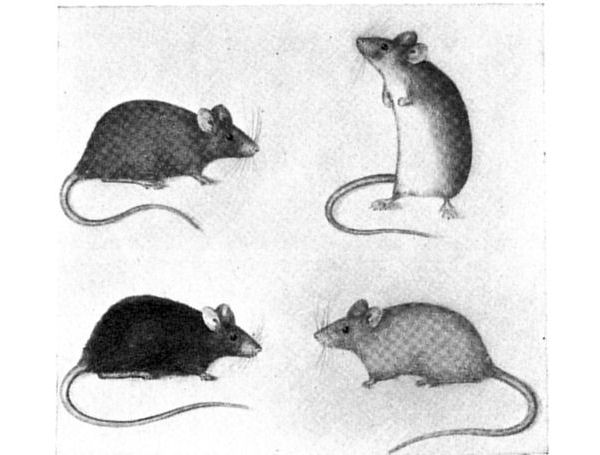
Crituqe of the Theory of Evolution  By: Thomas Hunt Morgan

When looking at how drastically different animals are depending on where they originated, it comes to mind how the environment would impact the evolution of a specific organism. When organisms such as the rodent or cockroach evolve, they adapt very differently to where they are, such as how a cockroach from America would be much more resistant to various bug sprays as a cockroach from Africa. Also how a mouse from Russia would be much more adapted to the cold, rather than a mouse from Japan.

SP6: Constructing explanations and designing solutions
During class we were given the task of designing an organism around the basis on a planet, showing how the planet would affect the evolution of the organism. The planet we decided on was tropical, with the biggest threats to life was a carnivorous snake, and a plant on the ground that poisons an organism upon touch killing it. We designed around those two points by making an organism that flies and swims, it focuses mainly of speed, but if it were to get attacked its second line of defense is an electric shock that would be able to stun or kill a foe. It hunts primarily in the water for small fish.

XCC: Structure and Function
In various habitats, organisms have various functions that helps them hunt, and live long enough to reproduce. The structure of a mouse is based off of the country it lives in, like if a mouse were to live in a cold environment it would evolve to have a thicker coat of fur to keep itself warm. While a mouse in a warmer climate might evolve to be more fast than its cold counter part, focusing on stealing food, rather than scavenging as that would be the easiest way to support its source of food.  

Friday, November 2, 2018

Cladograms


Because of the Earth's long history, and that all living organisms are related, there was a need for a way to sort all or a section of the living species on earth showing how they are related. That's where the cladogram comes in, it's a way the biologists use to sort various species based on all of the traits that they have in common. The farther up a cladogram a species is, the more specific traits it has. If a fish is at the bottom of a cladogram, and a bird is a the top, that means they are not closely related and the bird has more specific traits than the fish.

SP2: Developing and using models
During class we were given a sheet of paper that had 5 different animals on it, we sorted the various traits that each organism had onto a table, we then used a venn diagrams to further sort what traits each organism shared. After that we organized the organisms into a cladogram based off of what traits the each organism shared.

XCC:
When looking at a cladogram, there are multiple patterns that you can see, the farther up the cladogram an animal is, the more traits it has. The lowe an organism is on a cladogram, the less specific traits the organism has in comparison to the other organisms on the cladogram. Depending on what is on the cladogram different organisms might be higher or lower on the cladogram.